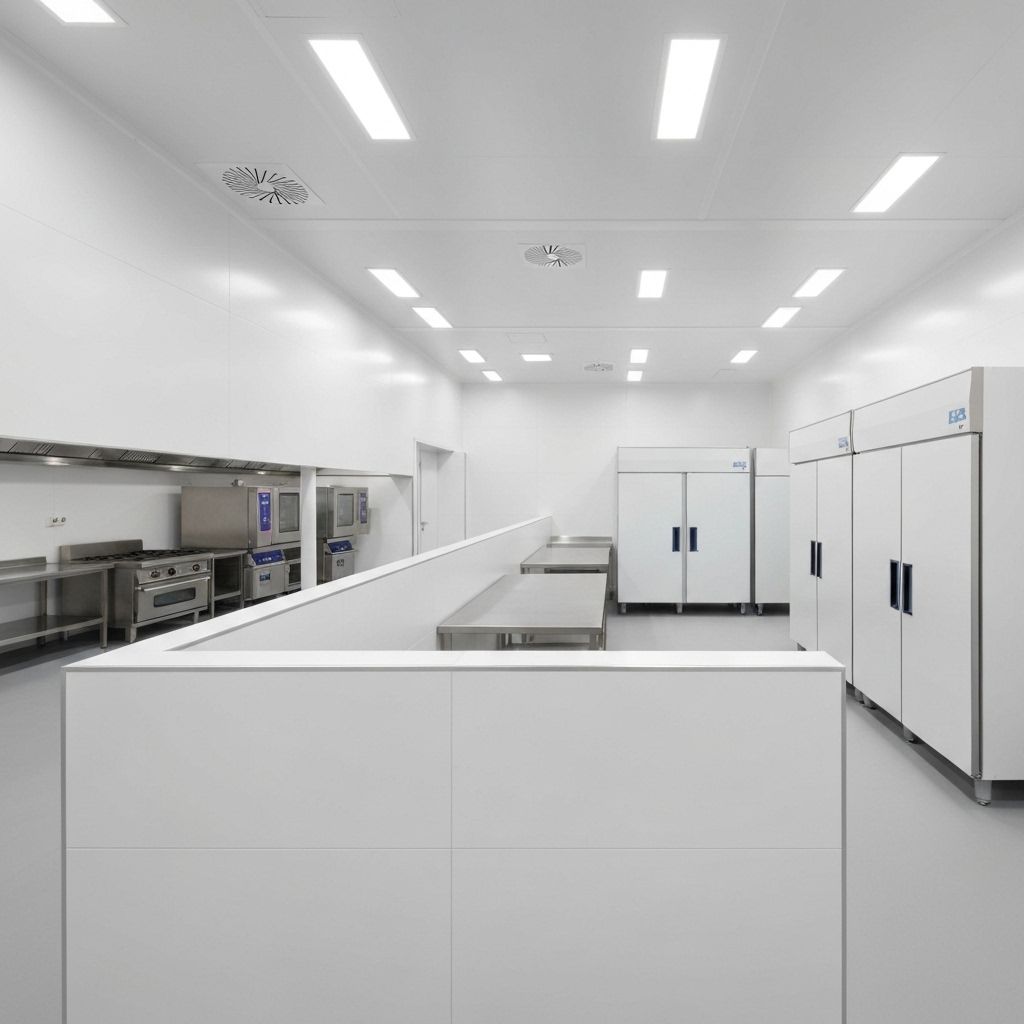
What is Wall Cladding?
Wall cladding is a protective covering applied to interior or exterior walls to create a durable, hygienic, and easy-to-maintain surface. Unlike paint or wallpaper, wall cladding forms a physical barrier that protects walls from moisture, impact, chemicals, and contamination.
In commercial and industrial settings, wall cladding has become the preferred choice over traditional tiles because it creates seamless, grout-free surfaces that are easier to clean and maintain. Modern wall cladding systems interlock to form impervious surfaces that meet strict hygiene regulations for food preparation, healthcare, and pharmaceutical environments.
Key Benefits of Wall Cladding
Hygienic
Seamless surfaces with no grout lines where bacteria can harbour
Durable
Lasts 20-25+ years with minimal maintenance
Waterproof
Impervious to moisture, steam, and splashes
Easy to Clean
Wipe-clean surface compatible with commercial cleaning
Cost-Effective
Lower lifetime cost than tiles when maintenance is factored in
Quick Installation
Faster to install than tiling, less downtime
Fire Rated
Options available meeting BS EN 13501 and BS EN 13501-1 standards
Chemical Resistant
Withstands aggressive cleaning chemicals and sanitisers
Types of Wall Cladding
There are several types of wall cladding available, each designed for specific applications and environments. Understanding the differences will help you choose the right option for your project.
PVC Wall Cladding
Rigid PVC panels that interlock to create a seamless, waterproof surface. The most popular choice for commercial kitchens and food processing.
Best for:
- Commercial kitchens
- Food factories
- Wet rooms
- Utility areas
Key benefits:
- Cost-effective
- Easy to install
- Waterproof
- Low maintenance
Hygienic Wall Cladding
Premium cladding with antimicrobial properties, designed for environments requiring the highest hygiene standards.
Best for:
- Hospitals
- Laboratories
- Pharmaceutical facilities
- Cleanrooms
Key benefits:
- Antimicrobial
- Chemical resistant
- Seamless joints
- FDA compliant
Fire-Rated Wall Cladding
Cladding that meets BS EN 13501 B-s1,d0 or BS EN 13501-1 Class 0 fire classifications for buildings requiring fire compliance.
Best for:
- Public buildings
- Schools
- Care homes
- High-rise buildings
Key benefits:
- Fire resistant
- Low smoke emission
- Building reg compliant
- Insurance approved
Decorative Wall Cladding
Cladding available in various colours, patterns, and finishes for areas where aesthetics matter as much as function.
Best for:
- Reception areas
- Changing rooms
- Retail spaces
- Leisure facilities
Key benefits:
- Wide colour range
- Pattern options
- Premium finishes
- Design flexibility
How Much Does Wall Cladding Cost?
Wall cladding costs vary depending on the type of material, the size of the area, and the complexity of the installation. As a general guide for professionally installed wall cladding in the UK:
Typical Wall Cladding Costs (Installed)
- Standard PVC wall cladding£40 - £55 per m²
- Hygienic wall cladding£50 - £70 per m²
- Fire-rated wall cladding£55 - £80 per m²
- Premium/antimicrobial cladding£65 - £90 per m²
*Prices include materials and professional installation. Complex installations with many corners, outlets, or ceiling work may be higher.
While wall cladding may have a higher upfront cost than paint, the lifetime cost is typically lower than tiles when you factor in reduced maintenance, no grout replacement, and longer lifespan.
Where is Wall Cladding Used?
Wall cladding is used in any environment where hygiene, durability, or easy maintenance is important. The most common applications include:
Commercial Kitchens
Restaurants, hotels, pubs, schools, hospitals
Healthcare
Hospitals, clinics, surgeries, care homes
Food Processing
Factories, bakeries, meat processing, dairies
Pharmaceutical
Cleanrooms, laboratories, manufacturing
Education
School kitchens, changing rooms, toilets
Leisure
Gyms, swimming pools, sports centres
Wall Cladding vs Tiles
The main advantages of wall cladding over traditional ceramic tiles are the seamless finish and easier maintenance. Tiles have grout lines that can harbour bacteria, stain over time, and require regular regrouting. Wall cladding eliminates these issues entirely.
Wall cladding can often be installed over existing tiles, avoiding the cost and disruption of tile removal. Installation is also faster - a typical commercial kitchen can be clad in 2-3 days compared to a week or more for tiling.
For a detailed comparison, read our guide: Hygienic Cladding vs Tiles: Pros & Cons
Wall Cladding Compliance & Regulations
In regulated environments, wall cladding must meet specific standards. Key compliance requirements include:
- Food Safety (HACCP): Impervious, smooth, easy-to-clean surfaces for food preparation areas
- Fire Safety (BS EN 13501 / BS EN 13501-1): B-s1,d0 or Class 0 rating for commercial buildings
- Healthcare (HTM 64): Antimicrobial surfaces for NHS and healthcare facilities
- Pharmaceutical (GMP): Cleanroom-compatible surfaces for drug manufacturing
- Cleanrooms (ISO 14644): Low particle emission and easy decontamination
Professional installation is essential to maintain compliance. Improper installation can void fire ratings and fail hygiene inspections.
How to Choose the Right Wall Cladding
When selecting wall cladding for your project, consider:
- Environment: What conditions will the cladding face? Heat, moisture, chemicals, impact?
- Regulations: What compliance standards must you meet? HACCP, fire rating, HTM 64?
- Aesthetics: Does the area need to look attractive, or is function the priority?
- Budget: Consider lifetime cost, not just upfront price
- Installation: Will you need to work around existing operations?
A professional site survey is the best way to determine the right solution for your specific requirements.